
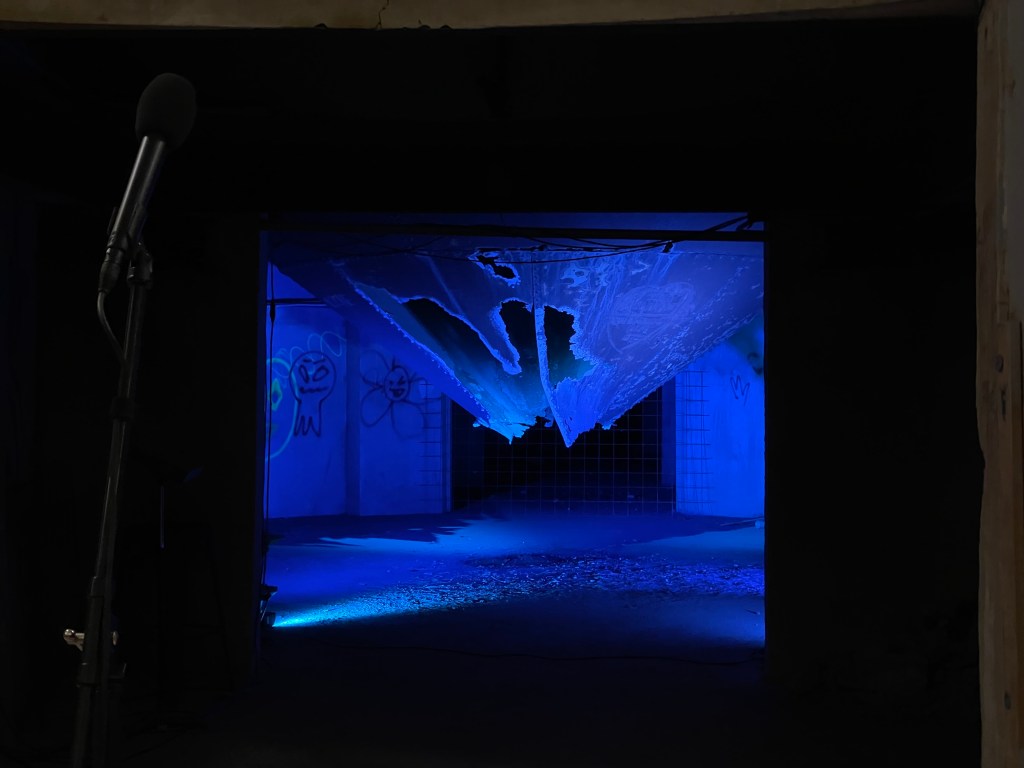
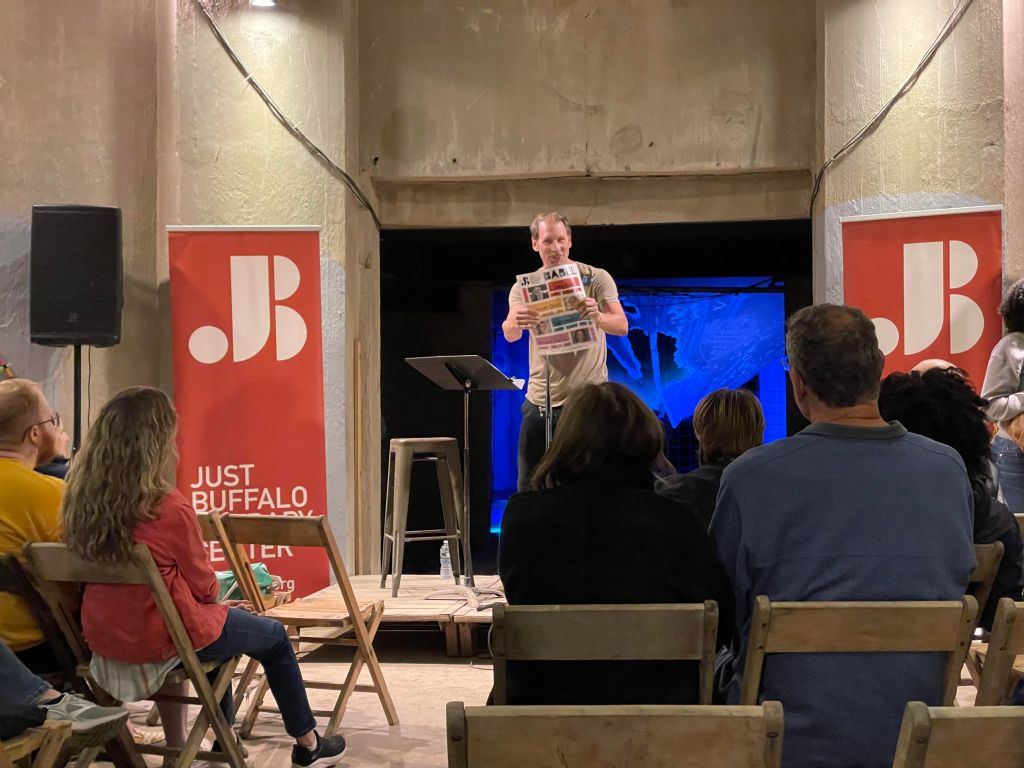
Describing a love poem written to her wife at the Silo City Reading Series, Donika Kelly said that she wasn’t sure if we had ever written poems, but if we had, then we’d know, “Most of the time they aren’t very good.” She proceeded to read only things that were lovely.
In the way that there’s a cover for the junkyard, there’s wristbands for the poetry reading. The junkyard is where you create usefulness out of the discarded; the Silo City Reading Series creates beauty in the remains of a bygone area. The series is held in the old grain silos, as it has been for 12 years. They have the enthusiastic cooperation of the owner of the site, the business owner of the metal shop next door who saw the silos less as an eyesore and more as inspiration for creativity. I can relate to this – I’ve lived next door to or two doors down from vacant houses, stared at them and imagined what I would do with them if they ever became mine. They never did. Some folks have Real Estate Money though.
There’s tiered admission, “I guess we’re doing this now,” described Noah Falck, the MC, someone whose involvement appears to have spanned the entire series. I listened from my chair wearing a blue wristband. I have Sitting Money now. I look up at the installation of gears by Daniel Seiders put in place for City of Night twelve years ago. That art is damaged now. All things weather.
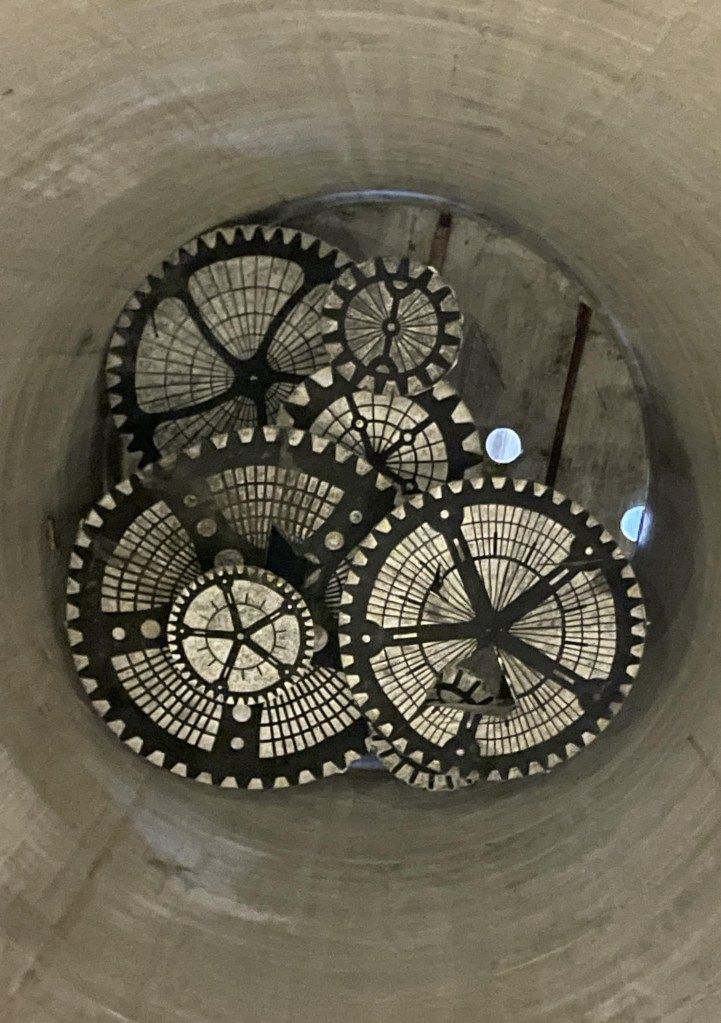
It’s not just that you’re in an interesting place hearing interesting words or music, looking at interesting objects. The acoustics are wild. The silos are concrete, tall. It’s like you’re reading poetry at the bottom of an organ’s pipes, and the resonance captures you. Kenzie Allen described lightheartedly likened it to hearing her words on high, that it was “great for the ego”.
It’s poetry to go into industrial remains and make art there. Buildings constructed on purpose for art look a lot different. This is making do with what happened and what we already have.
Beauty’s coexistence with the difficult is the zeitgeist; it’s the status of the world time immortal. There has never been a good time to be alive. The people with the most practice living this dichotomy are those who live difficult lives, or have been in the sphere of assistance of those who do. My own circumstances have been fortunate; I have a career where I am consistently exposed to other people’s suffering. I listen to folks who call me and describe problems are both dire and that I often cannot solve. I can and do help people, it’s just that I cannot help everyone.
Then I go home to a house that has my name on the deed, to cars that run, to kids that are reasonably healthy and happy, and a marriage filled with love and kind treatment. I fall asleep staring at a ceiling instead of the underside of the bridge. I see all the ways that my circumstances have been filled with fortunes that not all have. I want to live in the world where they do; I do not live in that world.
You get into a helping profession because you find the horrors of the world unacceptable. You cannot persist in a helping profession unless you learn to co-exist with the horrors, because the horrors are always there. If I were the sort of person who needed things to be OK to relax, I would never relax.
The zeitgeist is that the insulated feel vulnerable. We always have been, but now more so. I think the both/and experience of joys and horrors is going to become a practice that all of us have to adopt. Not escaping to the joys to ignore the horrors, or pretend they aren’t there. But as a place to recharge our batteries so we can face them fresh and effectively.
The Silo City Reading Series is an obvious example of creating something lovely out of whatever it is you have. It’s work, it requires a vision, it requires being anchored not in the negativity but in the sense that our hands result in something better. You don’t make something lovely unless you believe you can, and believe it despite being surrounded by evidence to the contrary. We need these examples that it’s possible. I had lovely evenings.

 Field Notes
Leave a comment