
Grunge music didn’t make sense to me until I lived in Seattle. I liked it – it was a staple of Syracuse rock stations and so it was everywhere. I didn’t really understand the music until I experienced the sunshine (or lack thereof) of the northern latitudes – the cloudiness, the short days of winter. The moodiness of it made more sense. Driving through some of the less economically successful parts of the Pacific Northwest made it resonate more. The thing is, the Seattle I lived in and the Seattle of grunge were not the same. The Seattle of grunge had economic anxiety and cheap rent. When I lived there, the decrepit apartments were being torn down, replaced by fancy things. Rents were skyrocketing. I left Seattle because it was clear it would become cost-prohibitive to raise a family there, and we weren’t feeling inclined to pay for the struggle of raising our kids away from our family.
I had absolutely lovely friends there, people I miss very much. They tell me the prices of housing got worse in the 11 years since we left. New transit opened that they were digging when we lived there. Some of our favorite restaurants are gone. It’s gentrified and expensive. The Seattle of grunge no longer exists. The Seattle I lived in likely does not exist either – I’m not there to confirm.
The same can be said about Buffalo though.
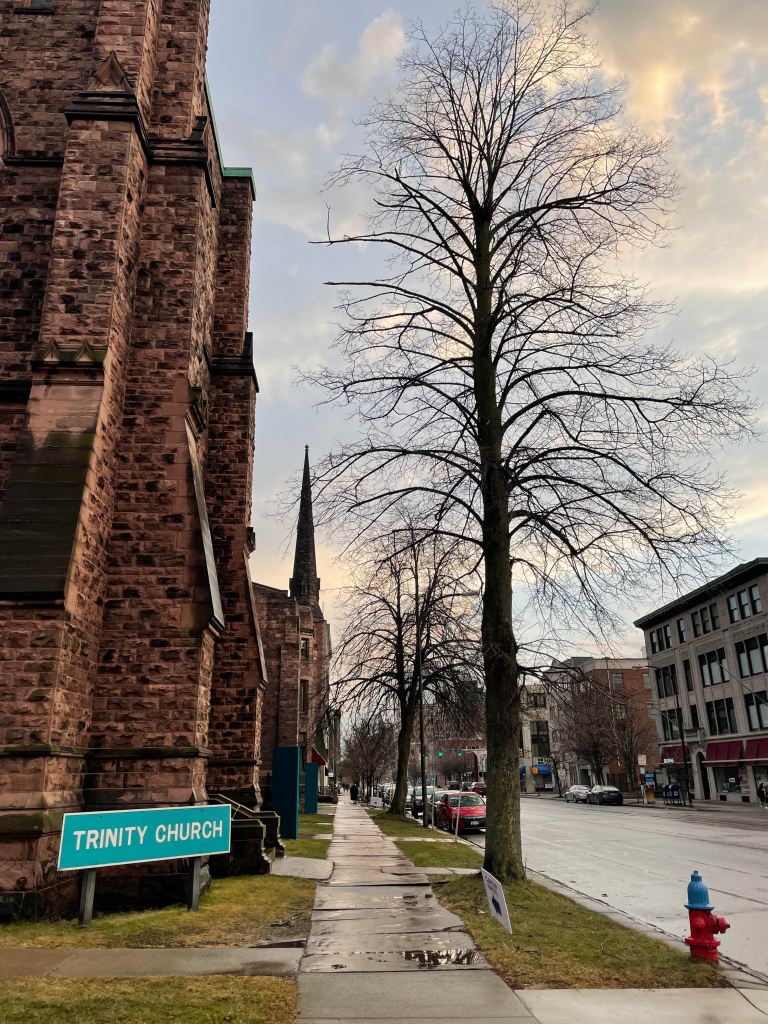
The Buffalo of 20 years ago had three to four-figure houses that people a touch older than me were buying and rehabbing to live in… or living in while they were rehabbing. Some people my age were doing that ten years ago too. (It’s a private site now, but “Unbreak My House” remains one of my favorite blog names.) You need a margin of money and time to do creative things. When life doesn’t cost as much, you’ll have more people who will have the space in their lives to create and consume each other’s art. This fostered arts spaces, punk houses, and in one famous case, an organized squat. That place burned almost two years ago. An expensive cost of living will eat that margin and then all of your creativity will come from the well-to-do, with the perspective of the well-to-do embedded in to the art. The Buffalo of now has higher homelessness and expensive rents. We’ve lost some of the vernacular art spaces – Dreamland is gone, the Lavender Room is losing their space, etc. We still have some other spaces. Allen Street is still pretty vibrant. I dread going to the suburbs, which feel so driven by large scale consumerism and so little by creativity. The small businesses, the art on buildings, the fact we are too close to each other to avoid interacting face to face – all of this creates a vibe. I like it, that’s why I am here.
I live in a version of Buffalo that will not exist quite in this way again. We do not get to know in what ways it will change until it’s already happened. Cities are not just geographies, they are moments of culture located in time. In the same way that people change over time, not being quite who they were in the years before, cities do too. What we see now is not something we’ll have in quite the same way ever again. Maybe I will look back at the current cost of living, the one we lament as too expensive now, and think of these years as cheap. Maybe we will think of these years as before the bubble burst and so did our economic futures. Maybe Buffalo won’t exist, washed into Lake Erie from some mega-seiche we didn’t know was possible. Maybe maybe maybe. We do not know the future. It could be wonderful.
The difference between speed and vector is direction – both measure distance over time, but velocity measures where you are going. I’d argue that cities should be conceived of not just in their geographic location but in the era we are remembering them in. The variation over time is a component of the place. I would also argue we should understand cities as places we co-create and not just places that we consume. I think the inevitability of change is an opportunity – our actions make the present and the future of where we are now. Sure, that co-creative power is not equitably distributed. But it is shared. In the same way that we can work on improving ourselves, we can also work towards transforming our cities. We can be the force that adds art to them. We can contribute to a culture of care and generosity. We can contribute to sustainability. We can be the reason our places are more lovely.

 Field Notes
Leave a comment